In India, an employee who is terminated from employment has several legal rights, including the right to receive pending salary, notice pay (if applicable), gratuity, provident fund (PF), leave encashment, and a service certificate. If the termination is illegal, unfair, discriminatory, or violates the employment contract, the employee may challenge it before the appropriate labour authority, labour court, or civil court. The available remedies depend on the employee’s designation, employment terms, and the reason for termination.
Understanding Employee Rights After Termination
Losing a job can be stressful, but employees in India are protected by various labour laws and employment regulations. Whether termination occurs due to redundancy, misconduct, poor performance, company restructuring, or other reasons, employers must follow proper legal procedures.
Employees should understand their rights to ensure they receive all lawful benefits and compensation after termination.
What Is Termination of Employment?
Termination means the end of the employer-employee relationship. It may occur due to:
- Resignation by the employee
- Dismissal for misconduct
- Retrenchment or layoffs
- Poor performance
- Contract expiration
- Company closure
- Redundancy or restructuring
- Mutual separation
The rights available depend on the type of termination.
Major Rights of Employees After Termination

- Right to Receive Pending Salary
An employee is entitled to receive:
- Salary for days worked
- Unpaid incentives
- Approved reimbursements
- Overtime payments (where applicable)
The employer cannot withhold earned salary without a valid legal reason.
Timeline
Generally paid during the final settlement process, often within 30 to 45 days depending on company policy.
- Right to Notice Period or Notice Pay
If the employment contract requires a notice period, the employer must:
- Allow the employee to serve the notice period, or
- Pay salary instead of notice
For example:
| Notice Period | Employee Entitlement |
| 30 Days | One month’s salary |
| 60 Days | Two months’ salary |
| 90 Days | Three months’ salary |
Always check the employment agreement or appointment letter.
- Right to Gratuity
Under the Payment of Gratuity Act, 1972, employees are generally eligible for gratuity if they have completed at least 5 years of continuous service.
Exceptions
The 5-year condition may not apply in certain situations such as death or permanent disability.
Gratuity Formula
Gratuity = (Last Drawn Salary × 15 × Years of Service) ÷ 26
Timeline
The employer should generally pay gratuity within 30 days from the date it becomes payable.
Authority
Controlling Authority under the Payment of Gratuity Act.
Fee
No government fee for filing a gratuity claim before the authority.
- Right to Provident Fund (PF)
Employees can claim:
- Employee contribution
- Employer contribution
- Applicable interest
PF remains the employee’s property even after termination.
How to Claim
- Log in to the EPFO portal.
- Verify KYC details.
- Submit an online withdrawal or transfer request.
- Track the application status.
Authority
Employees’ Provident Fund Organisation
Timeline
Usually 7–20 working days after approval.
- Right to Leave Encashment
If company policy permits leave encashment, employees are entitled to payment for unused earned leave.
This amount should generally be included in the final settlement.
- Right to Experience Letter and Service Certificate
Employees can request:
- Experience letter
- Relieving letter
- Service certificate
These documents are important for future employment opportunities.
Employers generally should not refuse such documents without valid reasons.
- Right Against Illegal Termination
Termination may be challenged if:
- No valid reason is given.
- Contract terms are violated.
- Statutory procedure is ignored.
- The action is discriminatory.
- Retrenchment rules are not followed.
- Natural justice principles are violated.
In such cases, employees may seek legal remedies.
When Is Termination Considered Illegal?
Termination may be unlawful if:
No Notice Given
Where notice is legally required but not provided.
Contract Violation
Employer fails to follow the employment agreement.
Retaliatory Action
Employee is terminated for:
- Filing complaints
- Reporting workplace violations
- Exercising legal rights
Discrimination
Termination based on:
- Gender
- Pregnancy
- Disability
- Religion
- Caste
- Other protected grounds
Violation of Natural Justice
For misconduct cases, employees should generally be given:
- A chance to explain
- A disciplinary inquiry where required
- An opportunity to defend themselves
Step-by-Step Procedure If You Believe Your Termination Is Unfair
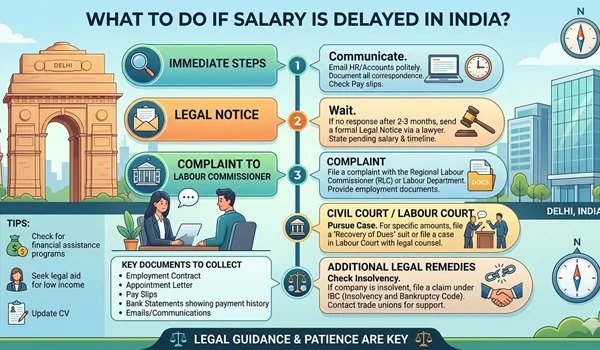
Step 1: Collect Important Documents
Keep copies of:
- Appointment letter
- Salary slips
- Termination letter
- Emails and communications
- Attendance records
- Performance reviews
Step 2: Review Employment Terms
Check:
- Notice period clause
- Termination clause
- Compensation provisions
- Settlement terms
Step 3: Send a Written Representation
Write to HR or management seeking:
- Reason for termination
- Pending dues
- Settlement details
- Reconsideration if applicable
Keep records of all communication.
Step 4: Approach Labour Authorities
If the dispute remains unresolved, a complaint may be filed before:
Labour Commissioner
For labour-related disputes and settlements.
Conciliation Officer
Attempts to resolve disputes through mediation.
Labour Court
For eligible workmen under labour laws.
Step 5: File a Legal Case
Depending on the circumstances, employees may approach:
- Labour Court
- Industrial Tribunal
- Civil Court
- Appropriate Government Authority
Legal advice may be useful before initiating proceedings.
Authorities That Can Help
| Authority | Purpose |
| Labour Commissioner | Employment disputes |
| Conciliation Officer | Settlement discussions |
| Labour Court | Illegal termination cases |
| Industrial Tribunal | Industrial disputes |
| EPFO | PF claims |
| Gratuity Authority | Gratuity disputes |
Fees and Costs
| Action | Approximate Government Fee |
| Labour Complaint | Usually Nil |
| Gratuity Claim | Usually Nil |
| PF Claim | Usually Nil |
| Legal Notice Through Lawyer | Professional charges vary |
| Court Case | Depends on case type |
Professional legal fees differ based on location and complexity.
Important Timelines
| Activity | Typical Timeline |
| Full & Final Settlement | 30–45 Days |
| Gratuity Payment | Within 30 Days |
| PF Processing | 7–20 Working Days |
| Labour Complaint Resolution | Several weeks to months |
| Labour Court Proceedings | Several months to years |
Timelines may vary depending on the case.
Common Mistakes Employees Should Avoid
Accepting Settlement Without Review
Read settlement documents carefully before signing.
Not Keeping Records
Maintain copies of all employment-related documents.
Missing Legal Deadlines
Delays may affect legal remedies.
Verbal Complaints Only
Always communicate important matters in writing.
Ignoring Final Settlement Details
Verify:
- Salary calculations
- Leave encashment
- Notice pay
- Gratuity
- Bonus eligibility
Tips to Protect Your Rights After Termination
✔ Request a written termination letter.
✔ Obtain a full and final settlement statement.
✔ Preserve email communications.
✔ Download PF and salary records.
✔ Keep copies of performance evaluations.
✔ Seek clarification regarding deductions.
✔ File complaints promptly when required.
✔ Consult a labour law professional for complex disputes.
Employee Termination Rights Checklist
Use this checklist after termination:
Documents
- □ Appointment letter
- □ Termination letter
- □ Salary slips
- □ Bank statements
- □ PF details
- □ Company communications
Financial Dues
- □ Pending salary received
- □ Notice pay received
- □ Leave encashment received
- □ Gratuity received (if eligible)
- □ Bonus verified
- □ PF claim submitted
Employment Records
- □ Relieving letter obtained
- □ Experience letter obtained
- □ Service certificate obtained
Legal Protection
- □ Grounds of termination reviewed
- □ Written representation submitted
- □ Labour authority contacted if necessary
Frequently Asked Questions (FAQs)
Q: Can an employer terminate an employee without notice in India?
A: It depends on the employment contract and circumstances. In cases of serious misconduct, immediate termination may be permissible after following proper disciplinary procedures. Otherwise, notice or notice pay is commonly required.
Q: Can I claim gratuity after termination?
A: Yes. If you meet the eligibility conditions under the Payment of Gratuity Act, you can claim gratuity even after termination.
Q: How long does a company have to complete final settlement?
A: Many organizations complete the process within 30 to 45 days, though internal policies may vary.
Q: Can I challenge wrongful termination?
A: Yes. Employees may approach labour authorities, labour courts, or other appropriate forums depending on the nature of employment and the dispute.
Q: Can my employer withhold my PF amount?
A: No. PF contributions belong to the employee and can generally be withdrawn or transferred according to EPFO rules.
Q: Is an experience letter mandatory?
A: While specific obligations may vary, employees commonly have the right to request employment-related documents such as experience and relieving letters.
Q: What should I do if my employer refuses to pay my dues?
A: You should first send a written request. If the issue remains unresolved, approach the Labour Commissioner, relevant labour authority, or seek legal assistance.
Conclusion
Employee termination does not mean the loss of legal rights. In India, employees may be entitled to pending salary, notice pay, gratuity, PF benefits, leave encashment, and important employment documents. If the termination appears unfair or unlawful, employees can seek assistance from labour authorities and courts. The most important step is to preserve all employment records, understand contractual rights, and act promptly to protect legal interests. By knowing these rights and procedures, employees can ensure they receive the benefits and protections provided under Indian law.