Global markets can be deeply affected due to Geopolitical conflicts, trade disputes, supply chain disruptions, and economic uncertainty. It usually triggers sharp movements across different asset classes. While some commodities benefit from rising industrial activity, others attract investors looking to preserve wealth during uncertain times. This contrasting behaviour becomes especially visible during periods of heightened global tensions.
Copper, aluminium, nickel, zinc, steel, and other industrial metals are linked closely with manufacturing, infrastructure and economic growth. Expectations about industrial demand and global trade are reflected in their prices. Gold, and in some cases silver, are generally considered to be safe-haven assets, with investors tending to buy them when financial markets become volatile.
Difference between industrial metals and safe-haven metals
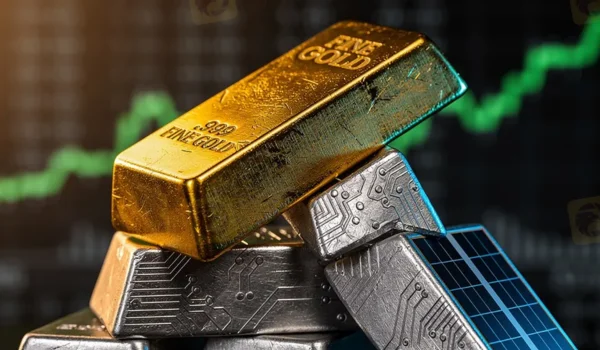
Although both belong to the broader commodities market, industrial metals and safe-haven metals serve very different purposes.
Industrial metals are primarily consumed in economic activity. Copper is used extensively in electrical wiring and renewable energy projects, aluminium is essential for transportation and construction, while nickel and zinc play important roles in manufacturing and infrastructure development. Their demand largely depends on industrial production, construction activity, and government spending.
Safe-haven metals, particularly gold, derive their value from investor demand. During periods of uncertainty, investors usually allocate capital to gold as it has historically been viewed as a store of value. Silver has a unique position as a result of the fact that it is both an industrial metal and a safe-haven asset. As a result, silver is able to react to more than 1 market force at the same time.
Why global tensions affect commodity markets
Major geopolitical events usually affect multiple markets across the world. They can create ripple effects across currencies, energy markets, equities, bonds, and commodities. When geopolitical tensions increase, several factors begin influencing commodity prices simultaneously. This may be due to:
- To lower the risk in their portfolios, investors seek more stable assets.
- Transportation disruptions can compromise supply chain systems.
- Availability of raw materials depends on sanctions or trade restrictions.
- Increasing costs for the production of many metals.
- Businesses defer investment until circumstances become clearer.
Why safe-haven metals attract investors
Gold behaves differently because its demand is driven more by investor sentiment than industrial consumption. During uncertain periods, many investors shift part of their portfolio toward assets they believe can preserve value, and gold has historically been one of those choices.
Geopolitical risks are also on the rise, pushing investors to hedge against market volatility and increasing gold demand. Strong demand can also be driven by inflation concerns, weaker equity markets, expectations of lower interest rates and currency uncertainty.
Silver is right down the middle. It benefits from safe-haven buying in times of uncertainty but also has major industrial uses. Hence, the price is a mix of investment demand and industrial activity.
These shifts in commodity prices also influence equity markets, as investors often track copper stocks to gauge industrial growth expectations, while gold stocks tend to attract greater attention during periods of heightened geopolitical uncertainty.
What traders should watch
Instead of reacting to headlines alone, traders should monitor the broader factors that influence both categories of commodities. This may include the following:
- Geopolitical developments and international trade policies
- Manufacturing and industrial production data
- Central bank interest rate decisions
- Inflation trends
- US dollar movements
- Supply disruptions in major mining regions
Conclusion
Industrial metals and safe-haven metals belong to the same commodity market, but they react differently to global tensions as they are influenced by different factors. The performance of industrial metals mostly indicates economic expansion and infrastructure investments. Meanwhile, the outlook for gold is one of the safety routes taken. For traders, understanding these relationships is more important than tracking daily price movements.