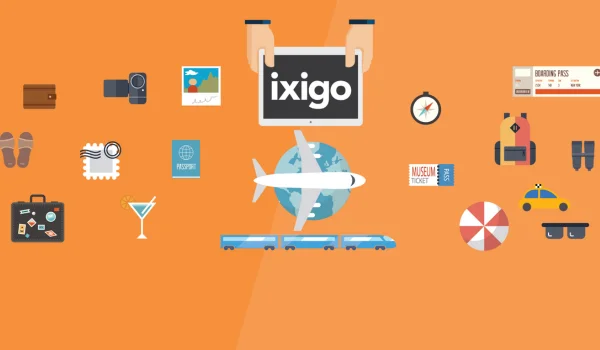
Ixigo has emerged as one of India’s most popular travel platforms, known for simplifying flight, train, and bus bookings through smart comparison tools and AI-driven features. With millions of monthly active users, the platform has transformed the fragmented travel booking space into a seamless, data-rich ecosystem where travelers can search, compare, and book tickets effortlessly.
Ixigo’s business model stands out because it blends price comparison, OTA (online travel agency) services, AI-powered travel assistance, and affiliate partnerships—all within a single app. At a time when travelers seek convenience, transparency, and accurate travel insights, Ixigo’s model delivers real-time information, cost savings, and a smooth end-to-end planning experience.
In this article, we break down the Ixigo business model, the customer journey, how the company earns revenue, and why it continues to grow rapidly in India’s expanding travel-tech landscape.
The Problem & Customer Pain Points
India’s travel ecosystem has long been plagued by fragmentation, price inconsistencies, and information gaps. Travelers typically face several challenges:
- Price Variations: Airfare and train ticket prices can fluctuate drastically across different platforms. Users often spend hours comparing prices manually.
- Lack of Transparent Options: Traditional travel agencies limit choices, while many online platforms fail to show all available alternatives in one place.
- Unreliable Information: Train delays, real-time seat availability, and last-minute changes are difficult to track.
- Time-consuming Planning: Managing bookings for different modes of transport (train + flight + bus) requires juggling multiple apps or websites.
- High Booking Fees: Some platforms add hidden charges, confusing customers about the final amount.
- Low Trust in Traditional Agencies: Offline agents sometimes lack transparency or charge extra without justification.
Ixigo spotted these challenges early and positioned itself as a smart travel companion—reducing the friction of comparing prices, offering accurate travel data, and ensuring convenience with a single, unified booking platform.
The Solution & Customer Journey
Ixigo solves the modern traveler’s problems through AI-powered search, price comparison, and multi-channel travel booking. Here’s how the customer journey flows from problem to satisfaction:
Step 1: The Problem – Confusion & Price Search
A user planning a journey wants the best fare, verified information, and a smooth booking experience. Traditional searches across multiple websites create confusion and consume time.
Step 2: Discovery – Using the Ixigo App/Website
The traveler installs the Ixigo app or visits the website to search for flights, trains, or buses. Ixigo aggregates results from multiple OTAs, airlines, IRCTC APIs, and bus operators—bringing all options to one screen.
Step 3: Decision – Smart Comparison & AI Tools
Ixigo offers:
- Price alerts
- Train running status
- PNR predictions
- Fare insights
- Alternative travel recommendations
These tools simplify decision-making and reduce user anxiety about cancellations, delays, or overpricing.
Step 4: Booking – Seamless Transaction
Customers book tickets directly on Ixigo (flight/bus) or are redirected to IRCTC for train bookings. Ixigo uses secure payment gateways and occasionally offers coupon-based discounts.
Step 5: Post-Booking – Support & Assistance
Users get helpful features like:
- Real-time alerts
- Delay/cancellation updates
- Auto web check-in
- Cancellation management
- Travel reminders
Step 6: Satisfaction – Saved Money & Hassle-Free Experience
The user feels satisfied because they saved time, found the best deal, and received smooth updates throughout the journey. This trust leads to long-term loyalty and higher lifetime value (LTV).
How Ixigo Makes Money
Ixigo’s revenue model is multi-layered, combining commissions, advertising, data monetization, and ancillary services.
Primary Revenue Streams
| Revenue Stream | How It Works | Profitability Notes |
| Booking Commissions | Earns commission from airlines, bus operators, and travel partners for each booking done via Ixigo. | High volume, moderate margins. |
| Affiliate Revenue | Redirects users to partner OTAs (e.g., IRCTC, other flight booking platforms) and earns referral fees. | Low effort, scalable. |
| Advertising Revenue | Brands pay for in-app ads, sponsored listings, and travel-related promotions. | High-margin revenue. |
| Freemium Services | Offers premium features like travel insurance, seat selection, and add-ons. | Strong contribution to ARPU. |
| Data & Insights | Travel providers pay for market intelligence and customer behavior data. | Niche but growing. |
| Cross-Selling | Hotels, travel insurance, credit cards, tourism packages. | Boosts LTV per customer. |
Pricing Strategy
Ixigo keeps most features free to attract large volumes of users. Revenue comes from service fees, commission-based margins, and optional paid features.
Unit Economics Explained
- Customer Acquisition Cost (CAC): Low, due to organic traffic, word-of-mouth, and repeat customers.
- Lifetime Value (LTV): High, as travelers use the app frequently for trains, flights, and buses.
- Margins:
- Flight commissions: 3%–8%
- Bus booking margins: 8%–15%
- Hotel commissions: 10%–18%
- Advertising: 60%–80% margins
Why This Model Works
- Ixigo enjoys massive organic traffic due to train utility tools.
- High user retention reduces marketing costs.
- Multi-service offering increases cross-selling opportunities.
- Low operational overhead increases profitability per booking.
Example or Case Study
Case: A traveler booking a Delhi → Goa trip
Rohit wants to plan a last-minute Goa trip. His main problems: fluctuating flight prices, uncertainty about train availability, and confusion about the cheapest option.
Customer Journey on Ixigo
- Rohit checks Ixigo and sees flight options, train availability, and bus alternatives.
- The app shows fare predictions, helping him decide the best time to book.
- Rohit chooses a flight after receiving a price drop alert.
- He books directly on Ixigo, earning cashback and using a discount coupon.
- Post-booking, the app helps with web check-in, real-time updates, and travel reminders.
How Ixigo Earns
- A commission from the airline for Rohit’s flight booking
- Advertising revenue from travel brands targeting him
- A small service fee added to the ticket
- Potential cross-sell revenue if he buys insurance
This example shows how one customer journey activates multiple revenue streams, proving the scalability and profitability of Ixigo’s business model.
Takeaways
Ixigo’s business model succeeds because it solves real problems—price transparency, convenience, and reliability. By integrating comparison tools, direct bookings, AI-driven travel assistance, and monetization through commissions and advertisements, Ixigo creates a sustainable, scalable system. Low CAC, high organic traffic, and strong repeat usage give it an edge in India’s competitive travel-tech market.
The model is future-proof as more Indians shift to online travel planning and multi-modal transport bookings. In short: Ixigo wins by being a smart, user-centric, data-driven travel companion.