High-performance manufacturing depends on speed, consistency, safety, and process accuracy. Production lines often include motors, drives, sensors, robotics, conveyors, programmable controllers, and connected machines. When these systems do not communicate well, manufacturers may face downtime, quality variation, slower throughput, or higher maintenance pressure.
This is why industrial control solutions for high-performance manufacturing are becoming essential across modern plants. These solutions help coordinate equipment, automate workflows, monitor process data, and improve control over critical operations. Let’s look at how industrial control solutions help manufacturers build more productive and reliable operations.
How do Smarter Control Systems Strengthen Factory Operations?
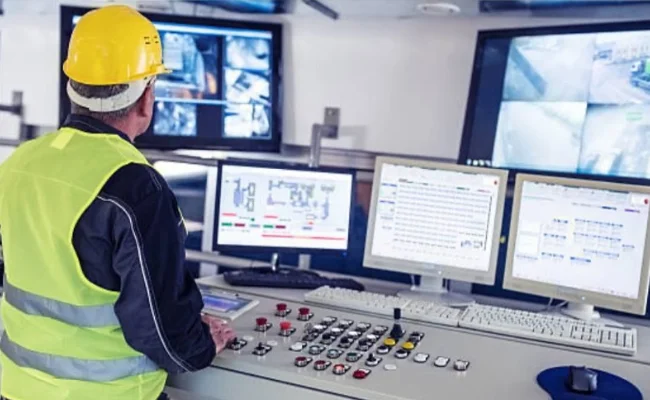
High-performance plants need more than powerful machines. They need coordinated control systems that connect equipment, data, people, and processes across the production environment.
1. Better Process Automation
Industrial control solutions help automate repetitive and time-sensitive production tasks. Programmable Logic Controllers (PLCs), Human-Machine Interfaces (HMIs), drives, sensors, and control software can work together to manage machine sequences.
This reduces manual intervention and helps maintain consistent process flow. Better automation also supports faster cycle times, smoother line coordination, and fewer operator-dependent variations.
It also helps operators focus on supervision, exception handling, and process improvement. This makes daily production more controlled, repeatable, and easier to scale.
2. Improved Production Accuracy
Manufacturing quality depends on precise control over speed, pressure, temperature, motion, timing, and material flow. Industrial control solutions help maintain these parameters within defined operating limits.
When systems can monitor and adjust conditions in real time, output becomes more consistent. This helps reduce rework, improve batch repeatability, and support tighter quality control across high-performance production lines.
3. Stronger Equipment Visibility
Modern control systems can collect live data from machines, sensors, motors, drives, and production cells. This gives operators and maintenance teams a clearer view of equipment status, alarms, faults, and performance trends.
Stronger visibility helps teams identify bottlenecks faster. It also supports better decisions around load balancing, operator action, maintenance timing, and production planning. This makes it easier to detect performance drift before it affects output. It also helps teams compare machine behavior across shifts, lines, or production batches.
4. Lower Downtime Risk
Unexpected stoppages can affect output, delivery commitments, and maintenance budgets. Industrial control solutions help reduce this risk through alarms, diagnostics, interlocks, and performance monitoring.
When abnormal conditions appear, teams can respond before failure becomes serious. This supports preventive action, safer shutdowns, faster troubleshooting, and improved recovery after faults across critical manufacturing assets. It also helps maintenance teams identify recurring issues across specific machines or process stages. This makes downtime reduction more systematic rather than reactive.
5. Safer and More Scalable Operations
High-performance manufacturing environments need safe control over moving equipment, electrical systems, and automated processes. Industrial control solutions can support safety logic, emergency stop functions, access control, and controlled machine operation.
They can also scale as production needs grow. Modular control architecture helps manufacturers add machines, lines, or process zones with better integration and lower disruption. This supports expansion without rebuilding the entire control environment. It also helps plants maintain consistent safety and performance standards across new production areas.
Building Smarter Manufacturing Control
Industrial control solutions help manufacturers improve automation, accuracy, visibility, uptime, and safety. In high-performance plants, these benefits can directly influence productivity, product quality, delivery confidence, and operating cost. A strong control system also gives teams the technical foundation needed for future upgrades, analytics, and connected manufacturing.
For plant leaders, automation engineers, and infrastructure teams, control strategy should be treated as a core productivity decision. Partnering with a reputable electric brand can help ensure better system design, safer integration, reliable components, and long-term technical support. With the right industrial control approach, manufacturers can build faster, safer, and more resilient production environments.