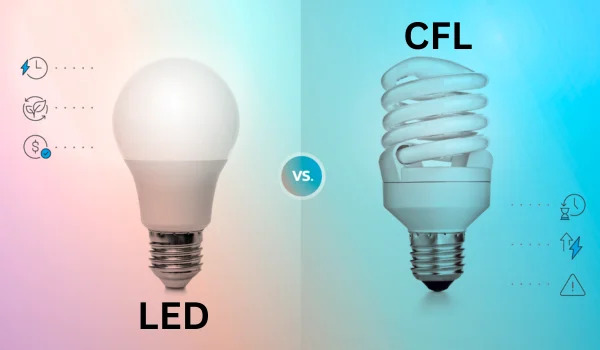
Choosing the right lighting can significantly reduce your electricity bill in India. Many households still use CFL bulbs, but LEDs are rapidly replacing them. So the big question is: LED vs CFL – which is better for saving energy and money?
This detailed guide compares both options with real costs, savings, practical tips, and step-by-step recommendations tailored for Indian homes.
⚡ Quick Comparison: LED vs CFL
| Feature | LED Bulb | CFL Bulb |
| Power Consumption | Very low | Moderate |
| Lifespan | 15–20 years | 2–5 years |
| Initial Cost | Slightly higher | Cheaper |
| Electricity Savings | High | Medium |
| Heat Generation | Very low | Medium |
| Eco-Friendly | Yes | Contains mercury |
👉 LEDs use almost 30% of the energy of a CFL for the same brightness
🛒 Real Examples (LED vs CFL Products in India)
LED Bulbs (Energy Efficient Options)
Havells LED Bulb Plus 9W · ₹154 · 4.6
Popular 9W LED bulb offering high efficiency and long life for Indian homes.
Philips 12W LED Bulb B22 · ₹105
Reliable branded LED bulb with strong brightness and energy savings.
CFL Bulbs (Older Technology)
Skybright 25W CFL Bulb · ₹286
Typical CFL bulb consuming higher wattage for similar brightness.
Havells 26W CFL Bulb · ₹597
High watt CFL option but consumes more electricity than LED.
📊 PRODUCT COMPARISON TABLE
| Attribute | Havells LED Bulb Plus 9W
₹154•Flipkart + others |
Philips 12W LED Bulb B22
₹105•Onecube.in + others |
Skybright 25W CFL Bulb
₹286•Flipkart |
Havells 26W CFL Bulb
₹597•Amazon.in |
| Power Consumption | 9W | 12W | 25W | 26W |
| Brightness (approx) | High | High | Medium | Medium |
| Lifespan | 15,000–25,000 hrs | 15,000+ hrs | 6,000–8,000 hrs | 6,000–8,000 hrs |
| Price (₹) | ~150 | ~100 | ~286 | ~597 |
| Energy Saving | Excellent | Excellent | Moderate | Moderate |
| Heat Output | Low | Low | Medium | Medium |
| Eco Safety | Safe | Safe | Contains mercury | Contains mercury |
🔍 Step-by-Step: Which One Should You Choose?
Step 1: Compare Energy Consumption
- LED (9W) vs CFL (25W)
👉 LED uses ~60–70% less electricity
Monthly Example:
- 5 bulbs × 6 hours/day
- CFL → ~22 units/month
- LED → ~8 units/month
👉 Savings: ₹200–₹400/month
Step 2: Consider Long-Term Cost
LED:
- Higher upfront cost (₹80–₹150)
- Lasts up to 15–20 years
CFL:
- Cheaper initially (₹100–₹300)
- Needs frequent replacement
👉 Over 5 years, LED is 3–5x cheaper overall
Step 3: Check Indian Climate Suitability
LED:
- Works well in heat (Delhi, Rajasthan)
- Not affected by voltage fluctuations much
CFL:
- Slower start in winter
- Can flicker in low voltage areas
👉 Winner: LED for Indian conditions
Step 4: Evaluate Environmental Impact
- LED → No toxic materials
- CFL → Contains mercury (hazardous if broken)
👉 Important for homes with kids or pets
💰 Cost Breakdown
| Item | LED Setup (₹) | CFL Setup (₹) |
| 10 bulbs purchase | ₹1,000–₹1,500 | ₹800–₹2,500 |
| 1-year electricity cost | ₹1,500 | ₹3,000 |
| Replacement cost (5 yrs) | ₹0–₹500 | ₹2,000+ |
| Total (5 yrs) | ₹3,000–₹4,000 | ₹6,000–₹8,000 |
👉 LED saves ₹3,000–₹5,000 over time
🛠️ DIY Tips to Maximize Savings
- Replace bulbs room by room (budget-friendly)
- Start with high-usage areas (kitchen, living room)
- Use lower watt LEDs (7–9W) instead of high watt
- Clean bulbs regularly for better brightness
- Use white walls/reflective paint to enhance light
👍 Pros and 👎 Cons
LED Pros:
✔ Maximum energy saving
✔ Long lifespan
✔ Low heat (safe in summer)
✔ Eco-friendly
LED Cons:
❌ Slightly higher upfront cost
CFL Pros:
✔ Lower initial price
✔ Better than old incandescent bulbs
CFL Cons:
❌ Higher electricity usage
❌ Contains mercury
❌ Shorter lifespan
❌ Slower startup
⚠️ Common Mistakes to Avoid
- Choosing cheap low-quality LEDs (poor lifespan)
- Using higher watt than needed
- Not checking B22/E27 fitting type
- Mixing CFL and LED (inconsistent lighting)
- Ignoring warranty (1–2 years recommended)
- Using CFL in high-use areas
🔧 Maintenance Tips
- Clean bulbs every 2–3 months
- Avoid voltage fluctuations (use stabilizer if needed)
- Ensure proper ventilation (especially for LEDs)
- Replace flickering CFL immediately (safety issue)
- Use branded LEDs for longer life
❓ FAQs
- Which saves more electricity: LED or CFL?
LED saves significantly more—up to 60–70% less power.
- Are LEDs worth the higher price?
Yes. They recover cost within 3–6 months through savings.
- Can I replace CFL with LED directly?
Yes, both use same holders (B22/E27), so easy replacement.
- Do LEDs work in inverter or low voltage?
Yes, LEDs perform better than CFL in low voltage conditions.
- Is CFL harmful?
Yes, it contains mercury, which can be hazardous if broken.
- Which is better for Indian summers?
LED—because it produces less heat and reduces cooling load.
- How many units can I save per month?
Replacing 10 CFLs with LEDs can save 100–150 units/month.
🏁 Practical Conclusion
If your goal is to reduce electricity bills in Indian homes, the answer is clear: LED is far better than CFL.
While CFL bulbs were once considered energy-saving, LED technology has completely surpassed them in:
- Energy efficiency
- Lifespan
- Safety
- Long-term cost savings
👉 The smartest strategy:
Start replacing CFL bulbs with LEDs gradually, beginning with high-usage areas. Even a small switch can lead to noticeable savings within the first month.
In today’s Indian context—rising electricity tariffs, hot climate, and budget-conscious households—LED lighting is not just an upgrade, it’s a necessity.