Vitamin D deficiency is one of the most common yet overlooked health problems in India. Despite being a sunny country, studies suggest that a large percentage of Indians—across age groups—have low levels of Vitamin D. This paradox is mainly due to modern lifestyle habits, dietary patterns, and limited sun exposure.
In this detailed guide, you’ll learn everything important about Vitamin D deficiency—its symptoms, causes, diagnosis, treatment options, natural remedies, diet tips, and prevention strategies.
What is Vitamin D and Why is it Important?
Vitamin D is a fat-soluble vitamin that plays a crucial role in:
- Calcium absorption
- Bone strength
- Immune system function
- Muscle health
- Mood regulation
It is often called the “sunshine vitamin” because our body produces it when the skin is exposed to sunlight.
Why is Vitamin D Deficiency So Common in India?
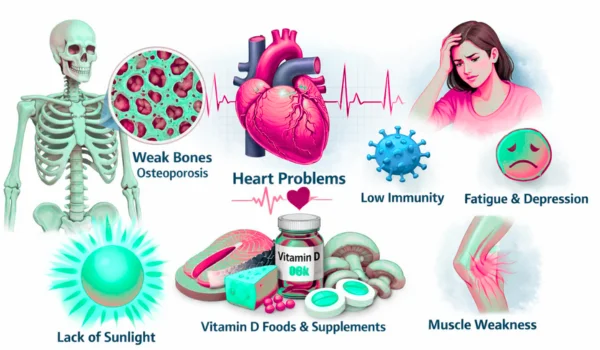
It may sound surprising, but even in a country with abundant sunlight, deficiency is widespread. Here’s why:
- Indoor Lifestyle
- Office jobs, online work, and screen time reduce sun exposure.
- Pollution
- Air pollution blocks UVB rays required for Vitamin D synthesis.
- Clothing Habits
- Full-body clothing limits skin exposure to sunlight.
- Skin Tone
- Darker skin (common in India) requires longer sun exposure to produce Vitamin D.
- Dietary Patterns
- Vegetarian diets often lack natural Vitamin D sources.
- Use of Sunscreen
- Excessive sunscreen use blocks Vitamin D production.
Symptoms of Vitamin D Deficiency
Symptoms can be mild initially and often go unnoticed. Over time, they may become serious.
Common Symptoms
- Weakness and Fatigue
- Feeling tired even after adequate rest
- Bone Pain
- Pain in lower back, legs, or joints
- Muscle Weakness
- Difficulty in climbing stairs or lifting objects
- Frequent Illness
- Weak immunity, repeated infections
- Hair Fall
- Increased hair thinning or shedding
- Mood Changes
- Low mood, anxiety, or symptoms of depression
Severe Symptoms (Advanced Deficiency)
- Osteoporosis (weak bones)
- Bone deformities (especially in children)
- Difficulty walking
- Fractures with minor injuries
Vitamin D Deficiency in Children
Children may show:
- Delayed growth
- Bowed legs (rickets)
- Weak bones
Vitamin D Deficiency in Women
Women, especially in India, are at higher risk due to:
- Less sun exposure
- Nutritional gaps
- Pregnancy and breastfeeding demands
Common symptoms:
- Joint pain
- Back pain
- Fatigue
- Hair fall
Diagnosis: How to Check Vitamin D Levels?
A simple blood test called 25-hydroxy Vitamin D test is used.
Normal Levels:
- 20–50 ng/mL → Adequate
- 12–20 ng/mL → Insufficient
- Below 12 ng/mL → Deficient
Always consult a doctor to interpret results correctly.
Treatment of Vitamin D Deficiency
Treatment depends on severity.
- Sunlight Exposure (Most Natural Method)
- Best time: 8 AM to 11 AM
- Duration: 15–30 minutes daily
- Expose arms, face, and legs
- Vitamin D Supplements
Doctors may prescribe:
- Weekly or monthly high-dose sachets
- Daily tablets or capsules
Common forms:
- Vitamin D2 (Ergocalciferol)
- Vitamin D3 (Cholecalciferol)
Important: Never self-medicate high doses.
- Calcium Supplements
Often given along with Vitamin D for better bone health.
Best Indian Foods Rich in Vitamin D
Diet alone may not be enough, but it helps.
Non-Vegetarian Sources
- Egg yolk
- Fish (salmon, mackerel)
- Chicken liver
Vegetarian Sources
- Fortified milk
- Fortified cereals
- Mushrooms (sun-exposed)
Indian-Friendly Options
- Paneer (fortified)
- Ghee (small amounts)
- Butter (limited)
Natural Home Remedies (Supportive)
These won’t replace medical treatment but can help improve levels.
- Sun Bathing Routine
- Daily exposure is the most effective natural remedy
- Mushroom Consumption
- Sun-dried mushrooms are a good vegetarian source
- Healthy Fat Intake
Vitamin D is fat-soluble, so include:
- Nuts
- Seeds
- Ghee (in moderation)
Long-Term Prevention Tips
- Daily Sun Exposure
Even 15 minutes can make a big difference.
- Balanced Diet
Include both Vitamin D and calcium-rich foods.
- Regular Health Checkups
Especially for:
- Women
- Elderly
- People with chronic illness
- Stay Physically Active
Exercise improves bone strength and metabolism.
- Avoid Overuse of Sunscreen
Use it smartly—after some sun exposure.
Who is at Higher Risk?
- Elderly people
- Pregnant and breastfeeding women
- Office workers
- People with obesity
- Individuals with kidney or liver disease
- Strict vegetarians
Complications of Untreated Deficiency
If ignored, Vitamin D deficiency can lead to:
- Osteoporosis
- Increased fracture risk
- Weak immunity
- Chronic fatigue
- Heart health issues (in some cases)
Common Myths vs Facts
Myth 1: “India is sunny, so no deficiency”
Fact: Lifestyle prevents adequate sun exposure.
Myth 2: “Only elderly people are affected”
Fact: Even young adults and children are affected.
Myth 3: “Diet alone is enough”
Fact: Sunlight is the primary source.
Myth 4: “More supplements = faster recovery”
Fact: Excess Vitamin D can be harmful.
FAQs
- How long does it take to recover from deficiency?
Usually 8–12 weeks with proper treatment.
- Can I take Vitamin D daily?
Yes, but only as per doctor’s advice.
- Is morning sunlight enough?
Yes, early morning sunlight is ideal and safer.
- Can Vitamin D deficiency cause weight gain?
Indirectly yes, due to fatigue and low activity levels.
- Is hair fall linked to Vitamin D deficiency?
Yes, it can contribute to hair thinning.
- Can I get Vitamin D through food only?
Not fully. Sunlight is essential.
Final Thoughts
Vitamin D deficiency is a silent but serious issue in India. The good news is that it is easily preventable and treatable with simple steps like sunlight exposure, balanced diet, and proper supplementation when needed.
Ignoring symptoms like fatigue, bone pain, or frequent illness can lead to long-term complications. So, early awareness and action are key.
Disclaimer
This article is for informational purposes only and should not be considered medical advice. Always consult a qualified doctor or healthcare professional before starting any supplements, medications, or treatment, especially if you have existing health conditions or are pregnant or breastfeeding.